
Custom Machining Factory
Why Is the Factory the Real Basis of a Schedule?
The short answer: because a lead time is a claim about physical capacity, and that capacity is either present on the floor or it is not. A shop with more than 100 machines can spread work and hold a date; a shop with one of each can only promise and hope. The factory is where a committed schedule becomes either true or false.
This is why the machine list is named rather than gestured at. When the date matters — and it always matters — your question is "do the machines exist to absorb this order," and the only honest answer is a floor you can see and audit.
Notice the order of reasoning you should hold: the date is downstream of the capacity, not the other way around. You cannot judge a promise until you know what physically stands behind it, and the factory is the only thing that physically stands behind anything. A date quoted without a floor to back it is a sentence, not a fact.
Which Machines Are Actually on the Floor?
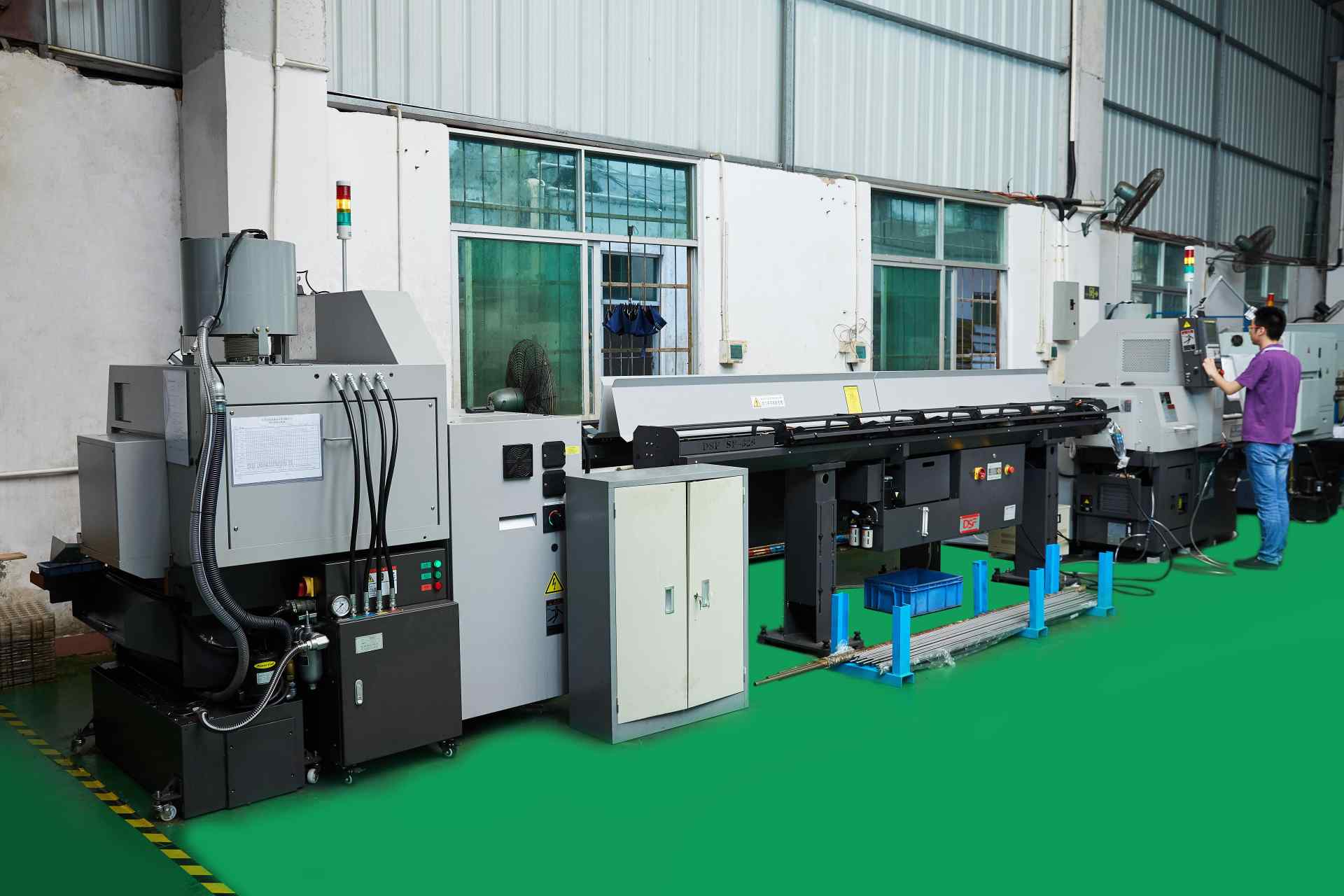
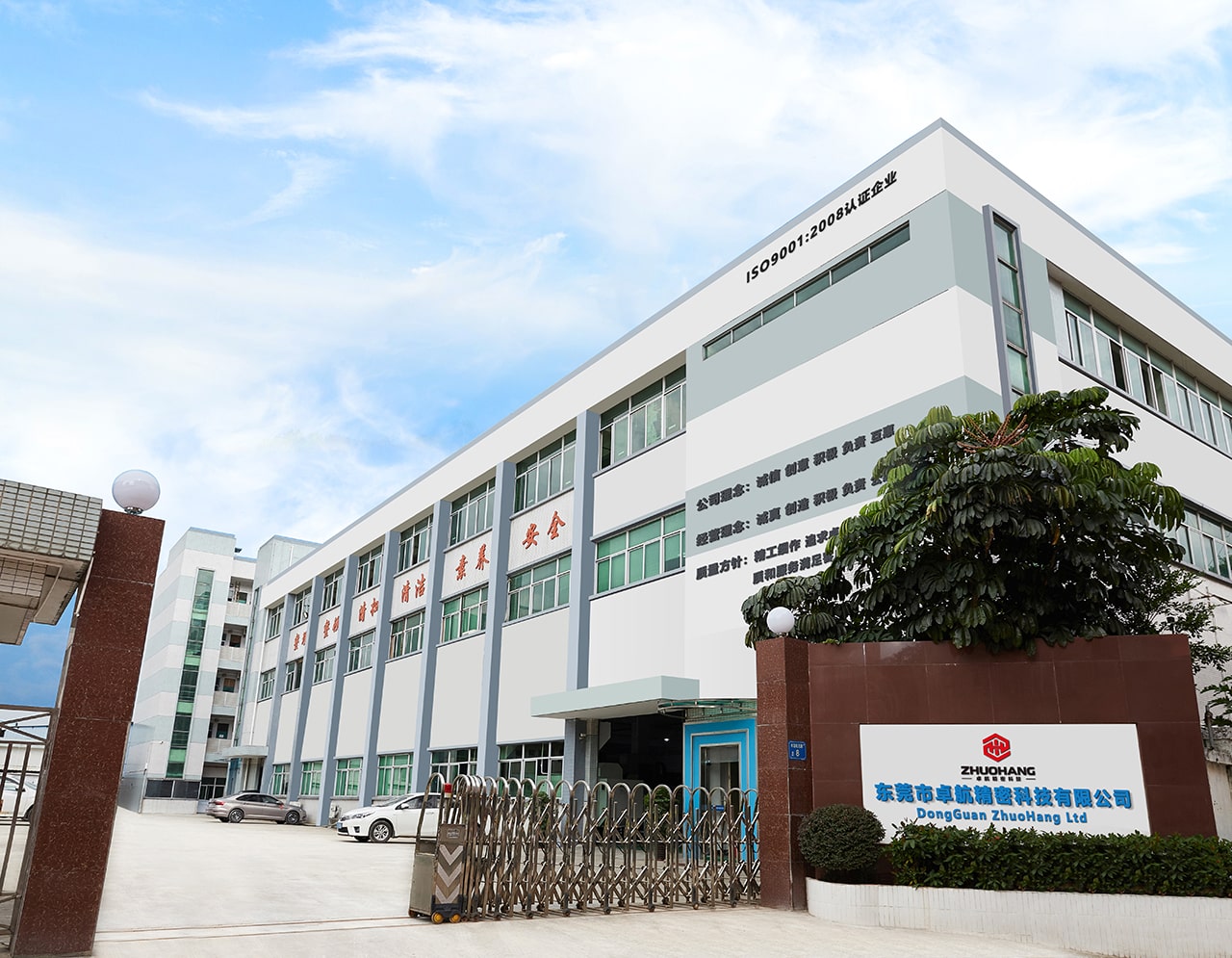
The floor is named by brand and role, in the mix that lets work run in parallel.
| Machine role | Brands / models | What it adds to capacity |
|---|---|---|
| High-speed machining centers | Brother SPEEDIO S500/S700 class | Fast prismatic milling |
| Heavy / mid-size machining centers | Mazak VCE class | Rigid cuts on larger workpieces |
| Mill-turn / multi-tasking | Mazak QT-COMPACT 200MSY L, INTEGREX class; Brother M-series | Single-clamp turn and mill |
| Swiss-type lathes | Citizen Cincom A20, Star SR-32J, Tsugami B0205/B0206 | Long, thin parts without deflection |
Machine depth in each role is what allows a turned part, a prismatic part, and a long thin part to run at once, which is the physical mechanism that keeps a committed date from slipping when several orders arrive together.
Why name the models? Because a model number is a testable claim. "We run Brother SPEEDIO S500/S700 class machining centers" is something you can check against the machine plate on a visit; "we run modern machines" is not. The difference between the two is the difference between an audit and a brochure, and a schedule is only as solid as the evidence behind it.
How Does the Machine Mix Hold Parallel Work?
The mix covers the metal-cutting family — 3-axis, 4-axis, and 5-axis milling, CNC turning, mill-turn, and grinding — with the largest workpiece envelope at 1300 × 700 × 600 mm for milling and Ø720 × 1280 mm for turning. That spread means different geometries run on different machines simultaneously, rather than sharing one bottleneck.
The planning point: parallelism, not raw speed, is what holds a schedule. A shop that can run ten different parts on ten different machines at once does not slip the way a shop with one machine of each type slips when orders stack up.
Think of the machine mix as the answer to a routing question. A turned part goes to a lathe, a prismatic part to a mill, a long thin part to a Swiss machine, and a part with both turned and milled features to a mill-turn center. When the mix covers the routing, each part follows its own path without waiting for another part's machine. When the mix does not cover it, every part funnels into the same queue.
How Does In-House Inspection Protect the Schedule?
Inspection that waits on an external lab is inspection with a lag, and lag is what turns a small drift into a big remake. Here, Hexagon GLOBAL S CMMs, an XRF spectrometer, a KEYENCE laser microscope, and a SURFCOM profiler sit in the same building as the machines, so a finding reaches the machine that corrects it in minutes.
That short loop is a schedule protection: a dimension drifting is caught and corrected mid-run, before it becomes a bad lot that would force a remake and blow the delivery date.
The location is the point, not the brand names alone. A CMM that sits across town at an external lab adds a round-trip to every measurement; the same CMM in the same building returns the finding before the next part is cut. When the schedule matters, "in-house" is not a convenience — it is the difference between correcting a drift in minutes and discovering a bad lot in days.
Which Certificates Bind the Factory's System?
Certificates confirm the factory's systems are real and audited, not just its machines. The plant holds three, with numbers you can verify.
| Standard | Certificate number | Scope |
|---|---|---|
| ISO 9001:2015 | 116024/A/0001/UK/En | Machining of metal parts |
| IATF 16949:2016 | 131941/A/0001/SM/En | Manufacture of CNC metal machining parts (excludes product design, Clause 8.3) |
| ISO 14001:2015 | 116024/B/0001/UK/En | Environmental management related to machining of metal parts |
Honest scope note: the IATF 16949 scope excludes product design under Clause 8.3 — the factory is build-to-print.
Why does the scope note matter to a buyer? Because a certificate describes a boundary, and a factory that states its boundary is a factory that will also state the boundary of a delivery date. The same honesty that writes "excludes product design" into a certificate is the honesty that writes "your target will not hold" into a quote. Both are the same habit: say what is true, even when the true thing is less flattering.
Where Is the Factory, and Who Is Behind It?
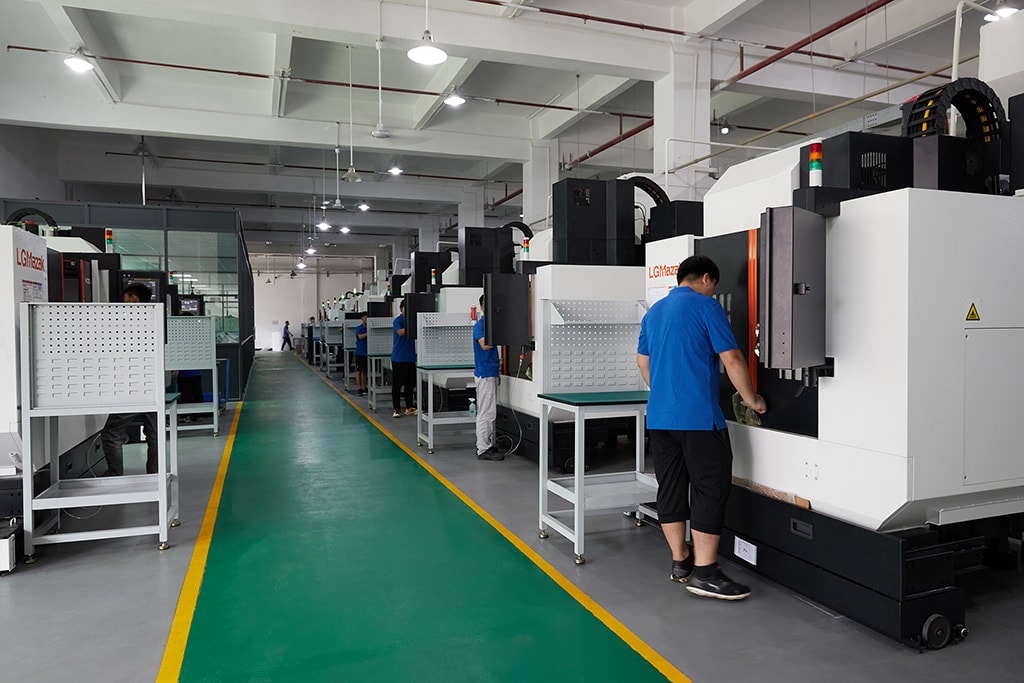
The factory operates under the legal name Dongguan Zhuohang Ltd, trading as Zhuohang Precision Machining Factory, with registration number 91441900MA4UWT6X39. Founded in 2005, it is located at:
No. 8, Shuibian Songyuan Road, Hengli Town, Dongguan City, Guangdong Province, China 523470.
Visits and audits are welcome — the address, machine list, and certificate numbers can be confirmed before you travel, so the trip verifies the capacity that will actually make your parts.
How Do You Verify a Capacity Claim Before You Visit?
Every shop claims capacity; the question is whether the claim can be checked. The answer is almost always yes, because a real factory can name its floor — the machine brands, the counts, the roles, and the largest part it can hold. A shop that cannot name its machines is asking you to trust a number it will not show you.
Ask for the specific list. Mazak, Brother, Citizen, Star, and Tsugami are brands you can look up, with roles you can map: machining centers for prismatic parts, Swiss-type lathes for long thin parts, mill-turn for single-setup work. The list is the capacity, and a factory that gives it to you has nothing to hide and everything to show.
The largest workpiece envelope — 1300 × 700 × 600 mm for milling and Ø720 × 1280 mm for turning — is part of the same check, because capacity is not just "many machines" but "machines that fit your part."
What Should a Factory Visit Confirm About the Schedule?
A visit is not a tour; it is a test of the claims behind the date. Walk in with a checklist, and the floor either confirms the capacity or reveals its absence.
- Count the machines that matter. Are the brands and roles you were told actually on the floor, and are they running, not parked?
- Look at the queue. A healthy shop has work moving across machines in parallel; a shop with one bottleneck has everything stacked in one place.
- Find the inspection room. CMMs, XRF, and profilometry in the same building are what catch drift before it becomes a remake.
- Ask to see a certificate. ISO 9001, IATF 16949, and ISO 14001 numbers can be verified; a wall without the numbers is decoration.
- Watch the people. 100+ employees across the floor is the labor depth that turns machine capacity into actual output.
Why Does Machine Depth Matter More Than Machine Count?
One machine of each type is a museum; depth in each type is a factory. The difference is what happens when several orders arrive in the same week. A shop with one lathe and one mill can only run one turned part and one prismatic part at a time; everything else queues. A shop with depth runs ten parts on ten machines at once.
Parallelism, not raw speed, is what holds a schedule. A single fast machine still serializes work, and serialized work slips when the queue grows. Depth is the reason a floor of 100-plus machines hold a date where a smaller floor would promise one and hope.
What Does a Certificate Number Actually Let You Check?
A certificate is only as strong as the number on it. ISO 9001:2015 (116024/A/0001/UK/En), IATF 16949:2016 (131941/A/0001/SM/En), and ISO 14001:2015 (116024/B/0001/UK/En) are not claims you have to take on faith — they are numbers you can look up against the issuing body.
The IATF 16949 scope matters in a specific way for schedule honesty: it covers the manufacture of CNC metal machining parts and excludes product design under Clause 8.3. That is a build-to-print factory being honest about what it does and does not do, and the exclusion is stated rather than hidden. A factory that overstates its scope is one to be careful with on dates, too.
How Do You Judge Whether a Factory Can Absorb Your Order?
Absorbing an order means two things: the machines exist, and they are not already full. The table below turns that into a set of yes-or-no checks.
| Check | What it tells you |
|---|---|
| Can it name the machines by brand and role? | Whether the floor is real or imagined |
| Does the machine mix cover your geometry? | Whether your part waits for a specific machine or runs in parallel |
| Is inspection in the same building? | Whether drift is caught in minutes or at an external lab |
| Are the certificate numbers verifiable? | Whether the system is audited or just claimed |
| Is there labor depth behind the machines? | Whether capacity is machines, or machines plus people |
Each "yes" is a reason the date will hold; each "no" is a reason it might not. None of this requires taking the supplier's word — it only requires asking, and then looking.
What Does 6,800 m² Actually Buy You?
Floor space is capacity in physical form, because machines, inspection, and people all need room to work without blocking each other. A 6,800 m² floor is not a vanity number — it is the room for over a hundred machines to run in parallel, for inspection to sit next to production, and for material to flow in and finished parts to flow out without crossing queues.
Why Would a Supplier Hide Its Machine List?
The machine list is the one thing you can verify from a distance, so a supplier who hides it is usually hiding something else. The reasons a shop will not name its machines are few, and none of them flatter the schedule: it has fewer machines than it implied, it has the wrong machines for your part, or it is a trading desk with no floor at all.
Red flag: a supplier who answers "we have enough machines" without naming brands, roles, or counts is asking you to trust the part of the schedule you can actually check. A named list — Mazak, Brother, Citizen, Star, Tsugami — is the difference between a claim you can audit and a claim you can only hope is true.
How Does the Founding Year Bear on the Schedule?
Founded in 2005, the factory has run long enough that its capacity is a fact of record rather than a plan. A shop that has held a floor and a workforce for that long has already survived the years in which machine lists are usually tested, which is a weak but real signal that the capacity claim is a description, not an aspiration.
What Makes an Audit Productive Instead of a Tour?
An audit that matters is one that checks the specific claims behind your date. Bring the drawing, the quoted tier, and the machine list, and confirm each against the floor: do the machines exist, does the routing fit your part, and does the inspection actually sit next to production?
What this shop actually runs
Ask for capability evidence and the answer should be specific. The facility behind this guide runs 100+ CNC machines on a 6,800 m2 floor in Dongguan, China, with 100+ staff. The machine list, by category:
- 5-axis machining centres (10+) - Mazak VARIAXIS I-600 (510/910/510 mm travel, 12,000 rpm, 22 kW, 71.6 N·m, 30-tool BT40) and Mazak INTEGREX I-250H S (B-axis 0.0001°, 24 kW, 124 N·m, 38-tool HSK-A63). Intended for compound-angle parts, single-setup multi-face prismatic work, and aerospace fittings where datum transfer loss is unacceptable.
- 3-axis / 4-axis machining centres (50+) - Brother SPEEDIO S500Z2N / S700Z2N (10,000 rpm, 14/21-tool ATC, 0.7 s tool-to-tool, Z-axis 2.2 G) and Mazak VCE-430A L / VCE-570C L (10,000 rpm, 118 N·m, 24-tool ATC). Intended for prismatic parts, plates, brackets, housings.
- Swiss-type turning centres (10+) - Citizen Cincom A20-3F7 (Φ20 mm, 10,000 rpm), TSUGAMI B0206-III / B0205-III (Φ20 mm, 0.1 µm), STAR SR-32JII / SR-32J Type N (Φ32 mm, 8,000 rpm). Intended for long, slender rotational parts at ±0.002 mm.
- CNC turning centres (20+) - HEADMAN T70M/1250 (720 mm swing, 117 mm bore, 3,000 rpm, BMT75 12-station turret). Intended for shafts, bushings, flanges up to ±0.002 mm.
- Wire EDM (5+) - Sodick AQ535L (550/350/300 mm travel, ±20° taper, 800 kg workpiece). Intended for hardened tool steel, internal splines, sharp internal corners that milling cannot reach.
- Inspection: Hexagon CMM + 20+ gauges - Hexagon CMM for coordinate measurement, plus vision system, profilometer, hardness tester, coating thickness gauge, XRF for material verification. The 10:1 rule (gauge 10x more accurate than the band) is applied to every feature.
- Machine highlights - VARIAXIS I-600: one-setup multi-face 5-axis + MAZA-CHECK auto-calibration; INTEGREX I-250H S: DONE-IN-ONE mill-turn, B-axis 0.0001° + Ai thermal shield; SPEEDIO S500Z2N / S700Z2N: Z-axis 2.2 G + 0.7 s ATC; Swiss-type: guide-bush switchable + 0.1 µm resolution.
Tolerances held: milling ±0.003 mm, turning ±0.002 mm, grinding and wire EDM ±0.002 mm. Capability: Ppk >= 1.67 initial and Cpk >= 1.33 in production on key characteristics.
Certifications: ISO 9001:2015 (116024/A/0001/UK/En), IATF 16949:2016 (131941/A/0001/SM/En, clause 8.3 design excluded, disclosed openly) and ISO 14001:2015 (116024/B/0001/UK/En), issued to Dongguan Zhuohang Ltd, USCC 91441900MA4UWT6X39, established 2005.
Service area: Austria, Belgium, the Czech Republic, Denmark, France, Germany, Greece, Hungary, Ireland, Italy, the Netherlands, Spain, Sweden and the United Kingdom in Europe; Brazil, Canada, Mexico and the United States in the Americas; China, Israel, Japan, Singapore and Sri Lanka in Asia; Australia and New Zealand in Oceania; and South Africa in Africa — built in China, shipped worldwide.
Contact: Felipe Iglesias, [email protected], +86 13126536955.
Verify the capacity behind the schedule
Arrange an audit or send a drawing to [email protected] or call +86 13126536955.
Frequently Asked Questions
Where is the factory located?
In short, At No. 8, Shuibian Songyuan Road, Hengli Town, Dongguan City, Guangdong Province, China 523470.
How large is the factory and how many machines does it run?
The facility covers 6,800 m² and runs 100+ production machines with more than 100 employees. The machine mix spans turning, milling, mill-turn, and grinding, so work can be spread across parallel machines rather than queueing behind a bottleneck.
Which machine brands are on the floor?
Mazak, Brother, Citizen, Star, and Tsugami. The mix covers high-speed machining centers, mill-turn and multi-tasking centers, and Swiss-type lathes, matched to the geometry of the part rather than to a single brand preference.
Does the factory inspect parts in-house?
Yes. Hexagon GLOBAL S CMMs, an XRF spectrometer, a KEYENCE laser microscope, and a SURFCOM profiler sit in the same building as the machines, so verification does not wait on an external lab and drift is corrected in minutes.
Is the factory certified?
It holds ISO 9001:2015, IATF 16949:2016, and ISO 14001:2015. The IATF 16949 scope covers the manufacture of CNC metal machining parts and excludes product design under Clause 8.3.
Can I visit the factory?
Yes, factory visits and audits are welcome. Contact [email protected] to arrange a time, and the address, machine list, and certificate numbers can be confirmed before you travel, so the visit is productive rather than a tour.
How do you verify a capacity claim before you visit?
Ask for the named machine list, the roles, and the largest workpiece envelope. A real factory can name Mazak, Brother, Citizen, Star, and Tsugami machines and tell you what each does; a vague answer is a claim you cannot check.
Why does machine depth matter more than machine count?
Because one of each type serializes work and everything queues, while depth runs ten parts on ten machines at once. Parallelism holds a date; raw speed alone does not.
What does a certificate number let you check?
The number can be looked up against the issuing body, and the IATF 16949 scope states plainly that product design is excluded under Clause 8.3. A factory that states its scope is a factory that will state the boundary of a date too.
Why would a supplier hide its machine list?
Usually because the floor is smaller, the machines are the wrong type, or there is no floor at all. A supplier that will not name its machines is asking you to trust the one part of the schedule you can actually verify.
What does 6,800 m² actually buy you?
Room for parallel work. Machines, inspection, and people need space to run without blocking each other, and staging space between steps is what lets parallelism happen. Capacity is machines plus floor plus people.
What makes an audit productive instead of a tour?
Bring the drawing, the quoted tier, and the machine list, and confirm each against the floor. The audit should end with a verdict on the schedule — whether the capacity that was promised is the capacity that exists.
How does the founding year bear on the schedule?
Founded in 2005, the factory has held its floor long enough that its capacity is a fact of record. It is one more checkable fact — alongside the address, registration number, machine list, and certificates — that a date rests on something real.
Why is inspection location a schedule question?
In short, Because a CMM across town adds a round-trip to every measurement, while one in the same building returns the finding before the next part is cut. In-house inspection is what turns drift correction from a days-long queue into a minutes-long loop, which is precisely what keeps a delivery date intact.
Continue reading: Custom Machining Services · Custom Machining Parts Manufacturer · Custom Machining Quality Control
Standards referenced on this page
- ASTM A582/A582M-12 — Standard Specification for Free-Machining Stainless Steel Bars
- ISO 14001 — Environmental management systems — Requirements with guidance for use
- ASTM B209/B209M-21 — Standard Specification for Aluminum-Alloy Sheet and Plate