
Custom Machining Parts
What Sets a Machined Part's Schedule and Cost?
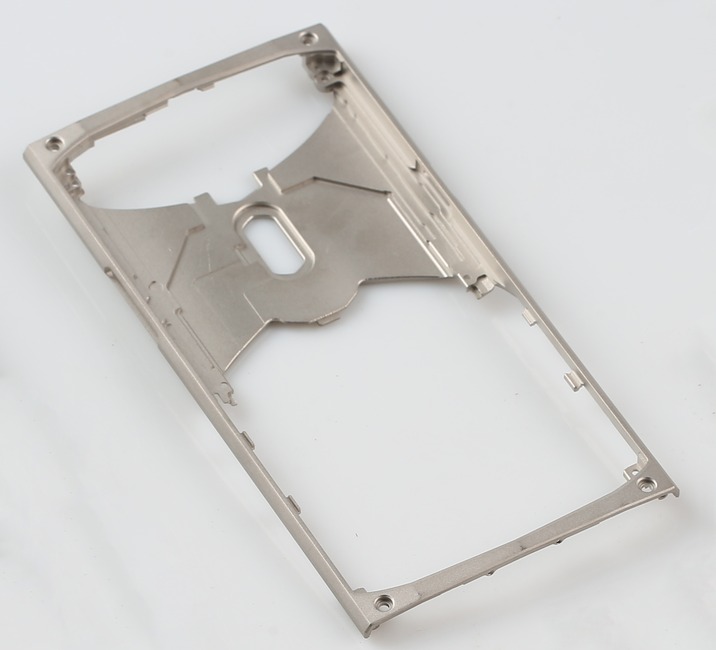
The short answer: its process-step count, made real by the capacity behind it. Every operation, setup, inspection, and finishing stage adds both time and cost, so a part with three steps is fast and cheap while a part with 10–20 steps is slower and more expensive, not because the machine is worse, but because the part travels further through the factory.
This is the single most useful thing to understand about machined-part pricing: the cost is not a markup on material, it is the accumulated labor and machine time of every step. Reduce the steps — by design, or by process choice — and you reduce both the price and the lead time at once.
The implication runs both ways, and the buyer who understands it has leverage at the drawing stage. A feature that can be reached in one setup instead of two, a tolerance that can be loosened to what function needs, a finishing call-out that can be dropped or simplified — each one removes time from the schedule and money from the price without touching the function. The cheapest place to reduce cost is in the design, before a single chip is cut.
What Processes Run In-House for These Parts?
The metal-cutting steps stay in-house because that is where the schedule is controlled. The in-house range covers CNC turning, milling, mill-turn, and precision grinding across over a hundred machines, so most parts move from blank to finished component without leaving the building.
Heat treatment and surface finishing run through qualified partners and are scoped into the same order. That is the honest reason finishing pushes a part into the longer tier: it adds a whole separate stage with its own cycle time, and that stage is named rather than hidden.
Why does in-house matter for the metal cutting specifically? Because that is where the schedule is controlled. When the cut stays in the building, the shop can re-sequence work across its own a hundred-odd machines the moment an order arrives; when the cut is subcontracted, the schedule depends on someone else's queue. Keeping the core process in-house is what lets a committed date be a commitment instead of a relay race.
What Materials Can Be Machined?
The material list spans aluminum, stainless steel, carbon and alloy steel, brass, copper, titanium, and magnesium, plus engineering plastics. Material matters for the schedule in a specific way: a hard or gummy alloy cuts slower and wears tooling, so it lengthens cycle time on every step, which is a planning fact, not a capability limit.
Every incoming lot is XRF-checked against its mill certificate before it reaches a machine, so a material error is caught at intake rather than discovered after the part has been machined and scheduled for shipment.
What Tolerances Can These Parts Hold?
The tolerance standard is tied to the process: ±0.003 mm (milling) / ±0.002 mm (turning) for turning and milling, ±0.002 mm for grinding, verified on Hexagon CMMs. On a representative length characteristic (76.1–76.5 mm), the SPC record shows Cpk = 1.851 (one characteristic on one part, not a blanket capability claim) against a key-characteristic standard of Ppk ≥ 1.67 initial.
Read the tolerance band before you read the index. Cpk is a ratio of the tolerance band to the process spread, not an absolute measure of accuracy. The figure above was recorded on a length characteristic with a 0.4 mm band (76.1–76.5 mm) — wide by design. Hold the same process spread against a ±0.005 mm feature and it fails outright. Ask for the band, the subgroup count and the sampling window on every capability number a supplier quotes.
Tolerance interacts with the schedule too — a dimension held to a tight tolerance may need slower feeds or extra inspection, which is why a drawing is read for both accuracy and time before a date is committed. A tolerance that is tighter than function needs costs time as well as money.
How do you know whether a tolerance is functional or habitual? Ask what the dimension does in the assembly. A bore that locates a bearing is functional; a decorative pocket called out to the same tightness is habit. The Cpk = 1.851 (one characteristic on one part, not a blanket capability claim) record on a representative length characteristic means the process holds tight tolerances with margin, but margin is wasted when the tolerance itself was never needed. Tightening a drawing without a function is a schedule tax you are choosing to pay.
Can a Single Part Be Manufactured First?

Yes — the minimum order quantity is 1 piece, which matters for lead-time planning in a specific way: it lets a buyer schedule and validate a prototype before committing a production run. The prototype confirms function, and the same reviewed geometry then scales into volume without a second tooling round or redesign.
This is the cheapest way to de-risk a schedule: prove the part works, prove the supplier's process holds it, then commit the volume against a date that has already been tested rather than estimated.
The prototype also settles the price argument before it starts. A first article that runs through the actual process steps produces a real cycle time and a real setup count, which become the numbers behind the volume quote. Without that first article, both sides are negotiating over an estimate, and an estimate is exactly the thing a dishonest schedule is made of.
How Does Capacity Keep a Schedule On Time?

Capacity is what turns a lead-time estimate into a commitment. With 100+ production machines and 100+ employees, work can be spread across parallel machines instead of queueing behind a single bottleneck: a turned part, a prismatic part, and a long thin part can all run at once.
The planning point: a shop with depth in each machine type can hold a date when several orders arrive together; a shop with one of each promises the date and hopes. Capacity is not a marketing number — it is the physical reason a schedule survives contact with reality.
How Do You Get a Schedule That Was Read, Not Guessed?
Send the same four things a quote needs: a STEP or IGES model, a 2D drawing with tolerances, the material grade, and your target quantity — plus any surface finishing or heat treatment. The response confirms the date against the part's actual process steps, or says honestly that your target will not hold.
That honest read is the whole discipline of lead-time planning. A date that survives it is a date you can build on; a date that is just repeated back is a risk wearing a calendar.
The four inputs — model, drawing, material grade, and quantity — are not a formality; each one changes the schedule and the price. The model sets the geometry and feature count, the drawing sets the tolerances, the material sets the cycle time, and the quantity sets whether the work is a one-off or a run. Leave one out, and the quote you get is a guess wearing a price tag.
Why Does the Same Part Cost More From One Supplier Than Another?
Because the cost is not a markup on material — it is the accumulated labor and machine time of every step, plus the overhead of the capacity that makes it. Two suppliers machining the same aluminum bracket can quote very different prices if one counts every setup, inspection, and deburring pass while the other counts only the cutting time and discovers the rest later.
The gap is not always dishonesty, but it is never free. A supplier who under-counts at the quote stage will either re-quote the missing steps later or absorb them by cutting corners — faster feeds, skipped inspection, less capable machines. The price you were shown was for a part with fewer steps than the part you will actually receive, and a schedule quoted the same way slips for the same reason.
How Do You Read a Drawing to Predict Its Schedule Before Quoting?
You do not need to be a machinist to make a useful first read. Three things on the drawing drive the schedule: the number of features, the tolerances on them, and the finishing call-outs.
- Count the features. Every tapped hole, pocket, bore, and datum face is an operation or a setup. More features means more steps, and more steps means more queue and handling time.
- Look at the tolerances. A dimension called out at ±0.003 mm (milling) / ±0.002 mm (turning) may need slower feeds or an extra inspection pass; a looser call-out does not. Tight tolerances add time on the machine and time on the CMM.
- Read the notes. Anodizing, plating, powder coating, heat treatment, or a surface-finish call-out adds a whole stage after the cut, and that stage has its own cycle time.
Run this three-point read before you send the drawing, and you will already know which tier your part belongs in — roughly 3 days, 7 days, or 30 days — before the supplier even answers.
Why Does a Tight Tolerance Change the Schedule?
A tolerance is a schedule input, not just a quality target. Holding ±0.003 mm (milling) / ±0.002 mm (turning) may mean a slower feed, a finishing pass, temperature-controlled measurement, or an extra CMM loop — all of which are time. The tighter the tolerance, the more time the part spends being held and verified rather than being cut.
The same logic applies to grinding: a bearing seat that must hold ±0.002 mm goes through precision grinding, which is a separate process with its own cycle and inspection. A part that only needs ±0.003 mm (milling) / ±0.002 mm (turning) from turning or milling skips that stage entirely.
What Makes a Material Slow to Machine?
Material choice changes the schedule for a physical reason, not a preference. A hard or gummy alloy cuts slower, wears tooling faster, and may need different feeds and speeds on every step, which lengthens cycle time across the whole part. Aluminum is fast; a tough stainless or a gummy copper alloy is slower; titanium is slower still.
This is not a capability limit — it is a planning fact. The material list here spans aluminum, stainless steel, carbon and alloy steel, brass, copper, titanium, and magnesium, plus engineering plastics, and each one carries its own cycle time. A supplier who quotes the same date for a titanium bracket and an aluminum one has not actually read the material call-out.
And because every incoming lot is XRF-checked against its mill certificate, the material that reaches the machine is the material on the drawing. The cycle time you were quoted is the cycle time that happens.
Which Part Features Push a Schedule Into the Long Tier?
The long tier is not a punishment; it is the honest sum of the features that add steps. The table below maps common features to the schedule pressure they add.
| Part feature | What it adds | Schedule effect |
|---|---|---|
| Few turned features, one material, no finishing | Minimal steps | Short tier, ~3 days |
| Multiple operations, standard tolerances | Several setups and inspections | Middle tier, ~7 days |
| Tapped holes, tight bores, multiple datums | More setups, more verification | Longer schedule |
| Surface finishing or heat treatment | A whole stage after the cut | Long tier, ~30 days |
| Precision grinding on a bearing seat | A separate process with its own cycle | Adds its own stage |
Read the table as a checklist against your own drawing. Every feature on the left adds the time on the right, and a date that does not account for all of them is a date that will be renegotiated later — usually at the worst moment.
How Do You Judge a Part Schedule and Cost Before You Commit?
The same discipline that protects a delivery date protects a price, because both come from the same read of the drawing. Run these checks before you accept either.
- Ask for the operation list. The price and the date should both be built from named operations; ask to see them, not just the totals.
- Ask about finishing up front. A part with plating or heat treatment belongs in the long tier; make sure the quote already includes it.
- Ask which tolerances drive cost. A functional tolerance is worth paying for; a habit tolerance is worth removing before you quote.
- Ask about material verification. XRF checks at intake are what keep the quoted material and cycle time from drifting after the order is placed.
- Ask for one prototype first. MOQ 1 lets you measure the real process — and the real price — before you commit volume.
What Changes When the Same Part Runs in Volume?
The part does not change, but the schedule and cost do, and for a simple reason: setups and programming are paid once and then amortized. A part that costs a lot per piece at MOQ 1 — where one setup serves one piece — drops in per-piece cost when the same setup serves a run, because the fixed work is spread across more parts.
The schedule follows a different logic. Volume does not compress the process steps; the same 10–20 steps still have to happen, but they are batched. The honest planning question is therefore not "how fast is one part" but "how does the shop schedule a run", and whether the capacity exists to absorb the whole run without queueing behind other jobs.
What this shop actually runs
Ask for capability evidence and the answer should be specific. The facility behind this guide runs 100+ CNC machines on a 6,800 m2 floor in Dongguan, China, with 100+ staff. The machine list, by category:
- 5-axis machining centres (10+) - Mazak VARIAXIS I-600 (510/910/510 mm travel, 12,000 rpm, 22 kW, 71.6 N·m, 30-tool BT40) and Mazak INTEGREX I-250H S (B-axis 0.0001°, 24 kW, 124 N·m, 38-tool HSK-A63). Intended for compound-angle parts, single-setup multi-face prismatic work, and aerospace fittings where datum transfer loss is unacceptable.
- 3-axis / 4-axis machining centres (50+) - Brother SPEEDIO S500Z2N / S700Z2N (10,000 rpm, 14/21-tool ATC, 0.7 s tool-to-tool, Z-axis 2.2 G) and Mazak VCE-430A L / VCE-570C L (10,000 rpm, 118 N·m, 24-tool ATC). Intended for prismatic parts, plates, brackets, housings.
- Swiss-type turning centres (10+) - Citizen Cincom A20-3F7 (Φ20 mm, 10,000 rpm), TSUGAMI B0206-III / B0205-III (Φ20 mm, 0.1 µm), STAR SR-32JII / SR-32J Type N (Φ32 mm, 8,000 rpm). Intended for long, slender rotational parts at ±0.002 mm.
- CNC turning centres (20+) - HEADMAN T70M/1250 (720 mm swing, 117 mm bore, 3,000 rpm, BMT75 12-station turret). Intended for shafts, bushings, flanges up to ±0.002 mm.
- Wire EDM (5+) - Sodick AQ535L (550/350/300 mm travel, ±20° taper, 800 kg workpiece). Intended for hardened tool steel, internal splines, sharp internal corners that milling cannot reach.
- Inspection: Hexagon CMM + 20+ gauges - Hexagon CMM for coordinate measurement, plus vision system, profilometer, hardness tester, coating thickness gauge, XRF for material verification. The 10:1 rule (gauge 10x more accurate than the band) is applied to every feature.
- Machine highlights - VARIAXIS I-600: one-setup multi-face 5-axis + MAZA-CHECK auto-calibration; INTEGREX I-250H S: DONE-IN-ONE mill-turn, B-axis 0.0001° + Ai thermal shield; SPEEDIO S500Z2N / S700Z2N: Z-axis 2.2 G + 0.7 s ATC; Swiss-type: guide-bush switchable + 0.1 µm resolution.
Tolerances held: milling ±0.003 mm, turning ±0.002 mm, grinding and wire EDM ±0.002 mm. Capability: Ppk >= 1.67 initial and Cpk >= 1.33 in production on key characteristics.
Certifications: ISO 9001:2015 (116024/A/0001/UK/En), IATF 16949:2016 (131941/A/0001/SM/En, clause 8.3 design excluded, disclosed openly) and ISO 14001:2015 (116024/B/0001/UK/En), issued to Dongguan Zhuohang Ltd, USCC 91441900MA4UWT6X39, established 2005.
Service area: Austria, Belgium, the Czech Republic, Denmark, France, Germany, Greece, Hungary, Ireland, Italy, the Netherlands, Spain, Sweden and the United Kingdom in Europe; Brazil, Canada, Mexico and the United States in the Americas; China, Israel, Japan, Singapore and Sri Lanka in Asia; Australia and New Zealand in Oceania; and South Africa in Africa — built in China, shipped worldwide.
Contact: Felipe Iglesias, [email protected], +86 13126536955.
Get a part schedule that was read, not guessed
Email [email protected] or call +86 13126536955 — the date is confirmed against the drawing.
Frequently Asked Questions
What sets a machined part's schedule and cost?
In short, Its process-step count and the capacity that makes it. More steps mean more queue and handling time, and each step adds cost as well as time.
What processes run in-house for these parts?
In short, CNC turning, milling, mill-turn, and precision grinding run in-house across more than 100 machines. Heat treatment and surface finishing go through qualified partners and are scoped into the same order, which is why parts with finishing land in the longer lead-time tier.
What materials can be machined?
In short, Aluminum, stainless steel, carbon and alloy steel, brass, copper, titanium, and magnesium, plus engineering plastics. Every incoming lot is XRF-checked against its mill certificate, so the alloy specified on the drawing is the alloy that reaches the machine.
What tolerances can these parts hold?
In short, Turning and milling hold ±0.003 mm (milling) / ±0.002 mm (turning) and precision grinding holds ±0.002 mm, verified on Hexagon CMMs. The SPC record on a representative length characteristic shows Cpk = 1.851 (one characteristic on one part, not a blanket capability claim) against a key-characteristic standard of Ppk ≥ 1.67 initial.
Can a single part be manufactured first?
Yes. The minimum order quantity is 1 piece, so a prototype can be scheduled and validated before a production run is committed. The same reviewed geometry then scales into volume without a second tooling round.
How does capacity keep a schedule on time?
In short, With 100+ machines and 100+ employees, work can be spread across parallel machines instead of queueing behind one bottleneck. A turning part, a prismatic part, and a long thin part can all run at once, which is what lets a committed date actually hold.
Why does the same part cost more from one supplier than another?
In short, Because the price is the accumulated labor and machine time of every step, not a markup on material. A supplier who counts every setup and inspection quotes a different number from one who counts only cutting time, so compare operation lists, not just totals.
What makes a material slow to machine?
Hardness and gumminess. A tough alloy cuts slower and wears tooling faster, which lengthens cycle time on every step. That is why the material grade is read before a date is committed, and why each lot is XRF-checked against its mill certificate.
What changes when the same part runs in volume?
In short, Setup and programming are paid once and amortized across the run, so per-piece cost falls. The process steps themselves do not compress — they are batched.
How do you judge a part schedule and cost before you commit?
In short, Ask for the operation list, confirm finishing is included up front, ask which tolerances drive cost, verify material is checked at intake, and run one prototype first. Price and date both come from the same read of the drawing, so the same checks protect both.
Continue reading: Custom Machining Factory · Custom Machining Services · Custom Machining Quality Control
Standards referenced on this page
- ASTM B211/B211M-19 — Standard Specification for Aluminum-Alloy Rolled or Cold Finished Bar, Rod, and Wire
- ASTM B348/B348M-21 — Standard Specification for Titanium and Titanium Alloy Bars and Billets
- ISO 9001 — Quality management systems — Requirements