
Custom Machining vs the Alternatives: Choosing the Material-Process Path That Wins
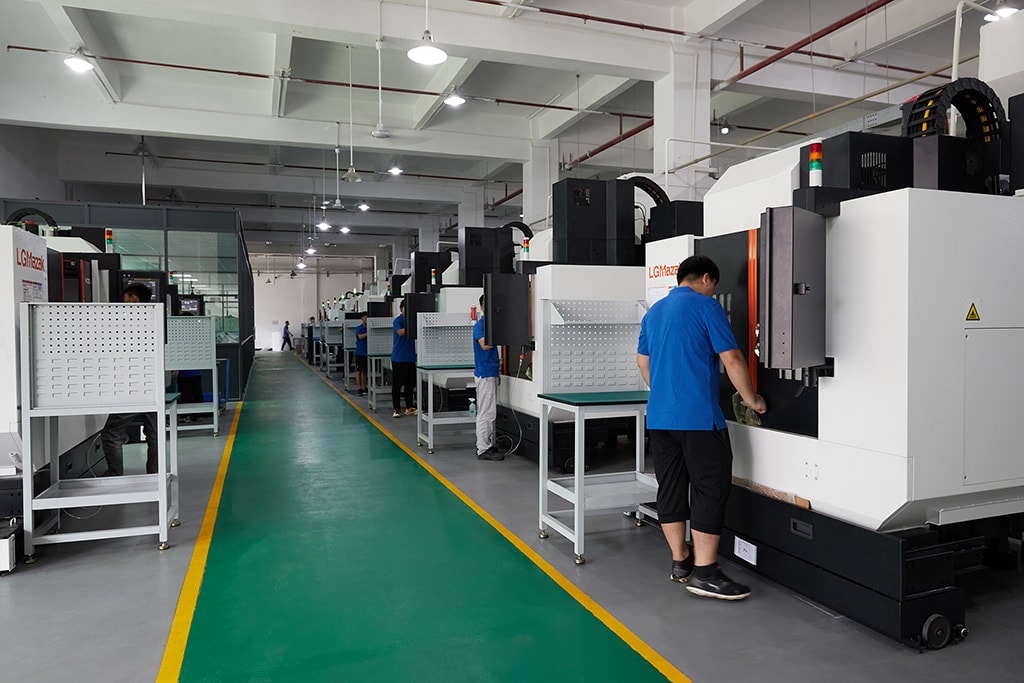
The question beneath every custom machining quotation is whether custom machining was the right route at all. The part could have been printed, cast, formed, or, more quietly, it could have been bought as a standard part and modified, or designed around a standard shape in the first place. This guide compares custom machining honestly against its alternatives, route by route, so the material-process decision is made for the part rather than inherited from habit.
What is custom machining actually competing against?
Most route comparisons list the manufacturing processes — machining, casting, printing, forming — and stop, but they omit the most common alternative of all: the standard part. A surprising share of "custom" parts are near-standard: a bracket that exists in a catalogue with the wrong hole pattern, a shaft that is one length short of a stock item, a flange that needs a different bolt circle. When the modification is light, buying the standard and machining the difference is cheaper than machining from solid, and the comparison should include it. Custom machining wins when the part is genuinely bespoke; it loses when the part is a standard that has not been recognised as one.
The process alternatives deserve their seats in the same comparison. Printing produces the geometries that machining cannot; casting and forming carry the economics of volume and near-net shape; machining holds the precision and material story that the others cannot. Each route has a home, and the buyer's job is to locate the part on the map before any supplier is called. The map has four regions — standard-plus-modify, machining, near-net, and additive — and a part usually sits clearly in one of them once the questions of volume, precision, and geometry have been asked.
How does precision place the part on the route map?
Precision is the first question because it eliminates routes outright. Custom machining holds controlled features to ±0.003 mm on milling and turning, with precision grinding at ±0.002 mm and process capability Ppk ≥ 1.67 at the initial study on the key characteristics. Near-net processes and printing hold bands looser by an order of magnitude and need post-processing on any functional surface. When the drawing carries tight fits, locations, or finishes, custom machining is not one option among equals; it is the route that makes the callouts achievable, and the other routes can only feed it near-net shapes for the precise features to be machined on.
The precision question should be asked feature by feature rather than part by part, because most parts are a mixture. A body with a cast-friendly shape and two precision bores is a hybrid part, not a machining part or a casting part. A housing that is printed for its internal channels and then machined on its mounting faces is a hybrid too. Buyers who separate the features that need precision from the features that merely exist find that the route map places most parts in the hybrid region, and the real decision is which route makes the body and which route finishes the critical features.
What does the volume curve say about the route?
Volume is the second question because it decides whether the tooling economics of the near-net routes can compete. Custom machining carries low setup and no tooling, which makes it the default for the quantities that most custom parts actually need — ones, handfuls, low hundreds. Casting and forming carry a tooling investment that must be recovered per piece, which only works when the volume is high enough. The crossover is not a fixed number; it depends on the material cost, the part weight, and the tool complexity, but it typically sits in the low thousands for simple tools and higher for complex ones. Below the crossover, the near-net unit price is a mirage drawn without its tooling line.
The volume question also exposes the standard-plus-modify route's economics. A standard part costs what a production run of that standard has already amortised, and machining a modification on it can be dramatically cheaper than machining the whole part from stock, but only when the modification is light and the standard is close. When the modification grows — new geometry, new features, new material — the standard becomes a handicap rather than a head start, and custom machining wins on every axis. The honest comparison prices the standard, the modification, and the custom route at the real quantity, and lets the arithmetic choose.
Which geometry points each part toward its process?
Geometry is the third question, and it sorts the routes by what they can physically produce. Machining removes material from stock and therefore loves accessible external and internal features, while it cannot reach a deep void that no tool can access. Casting fills a cavity and can form complex internal shapes, subject to draft, wall rules, and the need for the cavity to fill soundly. Printing builds geometry that no tool or mould can reach — internal channels, lattices, fully enclosed voids — within its own rules of overhangs and supports. The part's defining geometry, the feature that makes it hard, usually names the only route that can make it.
Forming deserves its place in the geometry comparison for the parts that are thin, sheet-like, or drawn. A part that is essentially a folded shape with machined details is often best made by forming the shape and machining the details, rather than machining the whole thing from a solid block that mostly becomes chips. The geometry question is therefore not which single route the part belongs to, but which route produces which portion of the part, and how the portions join. Parts are rarely single-route; they are assemblies of route decisions, and the buyer who reads them that way reads them correctly.
How does material narrow the field of routes?
Material is the fourth question, and it removes routes by menu. Machining handles every engineering material that exists in wrought form — metals from aluminum through steel, stainless, and titanium, plus the engineering plastics — because it transforms nothing, it removes stock. Casting has its own menu of alloys that flow and solidify well; forging wants alloys that respond to working; printing offers a narrower palette of printable materials. When the specification names a grade, the first material question is whether the alternative route can even produce that grade, and for many specifications the answer closes the alternative immediately.
Material condition is the quieter part of the material question. A machined part carries the condition of its certified wrought stock, with the properties and chemistry the data sheet assumes; a casting carries cast structure with its grain and possible porosity; a printed part carries its layer structure. Where the part must meet a material standard — strength, fatigue, corrosion, an industry specification — the route that starts from certified stock has the material story that is easiest to defend. Buyers comparing routes should ask what condition each route delivers, not just what material it nominally processes, because the condition is what the application actually sees.
When does additive earn its place beside custom machining?
Additive manufacturing deserves a fair seat because it has changed the geometry question permanently. Parts that machining cannot make and casting cannot draw — conformal channels, lattices, parts that must be light in ways only hollow geometry achieves — belong to printing, and no route comparison should pretend otherwise. The printing question for the buyer is not whether printing can make the part, but whether the printed output meets the mechanical and finish requirements, and how much post-machining the functional faces still need. Most printed parts that carry precision are printed-then-machined hybrids, and the buyer should plan for the machining leg from the start.
The comparison between printing and machining on the parts they both can make is usually decided by the other questions. At low volumes printing can beat machining on complex geometry and lose on simple geometry, where its per-piece cost and post-processing outweigh the absence of tooling. As volumes rise, machining's per-piece economics strengthen and the decision moves toward machining. The buyer's discipline is to compare like for like — a printed part that still needs machining on its faces must carry the machining cost in its column, or the comparison is fiction.
Capability and certification also enter the route decision when the part sits in a regulated or quality-controlled supply chain. A machining route from a shop holding ISO 9001:2015, IATF 16949:2016 (product design excluded), or ISO 14001:2015 carries a certified quality system and documented traceability; an additive or casting supplier must be verified for the same standards before it can serve the same chain. The certification question rarely decides a route by itself, but it eliminates suppliers and therefore routes, and it should be asked early enough that the route decision is not reshaped later by a supplier that cannot be qualified.
What does the lead-time calendar add to the route decision?
The route decision is incomplete without a calendar, because the processes differ enormously in when they deliver. Custom machining starts from stock and needs no tooling, delivering prototypes and first parts in days. Casting and forming add the tooling lead before the first part exists. Printing begins immediately but carries build and post-processing time. The standard-plus-modify route depends on the standard's availability, which can be immediate from stock or months from a back-ordered supplier. For a buyer with a deadline — and most custom buyers have one — the calendar is not a soft factor; it decides.
Draw the calendar end to end, including the validation steps that each route imposes before production. Machining validates with a first article; casting and forming validate with tooling trials before the finishing machining can run; printing validates with build trials and post-process checks. The route whose total time — tooling, validation, production, and the shipping leg if the supplier is abroad — fits the deadline is the route that runs; the one that does not fit is eliminated however attractive its unit price. Buyers who schedule from the first validation step rather than the first production part avoid the surprise of a tooling trial that reveals a problem in a tool that took weeks to make.
How do you settle the route and document the decision?
Once the questions are asked, the route decision should be written rather than carried in memory, because a written decision can be tested against the part and corrected when it fails. Set out the candidate routes; for each, record the precision it holds on the critical features, the volume economics at the real quantity, the geometry it can produce, the material condition it delivers, and the calendar it needs. Send the comparison with the model to the machining supplier and ask it to confirm or challenge each line with engineering. The supplier that engages with the written comparison is doing route engineering; the one that answers with a price alone has not read it.
Keep the decision with the part's file so it survives the project. When the route is validated — the first article passed, the part worked in assembly, the quantity economics behaved — the document explains why this part is machined rather than printed or cast, and that explanation answers the next stakeholder, the next budget review, and the next engineer who suggests changing the route on a hunch. Buyers who document route decisions find that the next similar part is decided in minutes rather than weeks, because the reasoning that served the last part transfers to the one that resembles it.
Frequently Asked Questions
When is a "custom" part actually better bought standard and modified?
When the modification is light and the standard is close — a hole pattern added, a length shortened, a face machined. The standard's tooling is already amortised, so the modified part can undercut a full custom machining quote. When the modification grows beyond light changes, the standard becomes a handicap.
What precision should I expect from custom machining?
Controlled features hold ±0.003 mm on milling and turning, precision grinding reaches ±0.002 mm, and key characteristics are held to Ppk ≥ 1.67 initial. Near-net processes and printing hold bands looser by an order of magnitude, so tight features point to machining.
When does 3D printing beat custom machining?
When the geometry defeats machining — internal channels, lattices, fully enclosed voids. For geometry both can make, machining usually wins on per-piece cost and precision once volumes rise, and printed parts that carry precision are usually printed-then-machined hybrids anyway.
Is a part that is cast and then machined better than a fully machined part?
At high volume, yes, when the tooling amortises and the body would waste too much material cut from solid. The functional faces still need machining, so the real decision is which route makes the body and which finishes the critical features.
Surface finish deserves its own line in the route comparison because it travels with the process. A machined surface is reached directly by the finishing operation, with the texture controlled by the toolpath and the tool; a cast or printed surface carries the texture of its process and needs machining or another treatment on any face that must function or seal. When the drawing names finishes on faces that matter, the route that reaches them without extra steps carries a cost advantage that the unit-price comparison hides. Buyers who fold the finish requirement into each route's cost column see the true ranking; those who leave it out discover it in the finishing invoices.
How do I compare the cost of routes fairly?
On total cost to a usable part at your real quantity, including tooling amortisation, finishing, inspection, and the calendar cost of waiting. A near-net unit price without its tooling line, or a printed price without its post-machining, is fiction.
What should I send a supplier to get a route opinion that holds up?
The model, the quantity, the material, the critical tolerances, and a written comparison of the candidate routes. Ask the supplier to confirm or challenge each line with engineering and numbers, and keep the document with the part's file.
Deciding whether a part should be custom machined at all, and want the route comparison argued honestly with the alternatives included?
Send the model, quantity, and material to [email protected] or call +86 13126536955 for the engineering comparison. The services page, the quality page, and the FAQ page on this site describe the capability in detail.