
Choosing a custom machining supplier online is a screening problem, not a research project. The candidates all claim the same capabilities, and the evidence that separates them is narrow and checkable — the entity behind the quote, whether the price structure reflects real machining cost, whether an engineer read your drawing, and whether a sample part measures what the report claims. This guide is a thirty-minute sequence built around those checks, ordered so the cheapest ones run first and the paid sample confirms everything the conversation could only claim.
What can you actually verify about a supplier from your desk?
Rank the evidence by how much trust it deserves, because not all evidence is equal. Website claims — materials, tolerances, machine lists, photos — are cheap to produce and often padded, so use them as a filter rather than a finding. The conversation is stronger: how the supplier quotes, whether it asks engineering questions, and whether the price falls as quantity rises. The strongest evidence is delivered: certificate numbers that verify with the registrar and a sample part whose dimensional report you can check against your own measurements.
Run the layers in that order and most candidates eliminate themselves in minutes. A site that never names a legal entity fails the filter. A lump-sum quote with no breakdown and no questions fails the conversation. A supplier that survives both still has to pass the sample, because a polished RFQ exchange does not guarantee a part that measures right.
Time the process: ten minutes on the entity and certificates, ten minutes on a quote request engineered to expose engineering depth, ten minutes reading the response. That is the thirty-minute screen, and it is the cheapest insurance you will buy in the entire supplier relationship.
First check: is it a real factory with a real legal entity?
Start with the name behind the quote, because certificates, contracts, and customs paperwork all key off the registered entity. Look for a legal entity, not just a brand, and check that the entity on the quote matches the entity on the certificates and the payment details. Brokers commonly quote under one name while the machining happens under another, and that mismatch is the least expensive red flag in China sourcing.
Verify the certificate numbers rather than admiring the logos. A supplier that shows ISO 9001:2015, IATF 16949:2016, and ISO 14001:2015 carries a registrar reference for each, and a lookup confirms the certificate is current, in the correct legal name, and scoped to what the supplier claims. Read the scope line as well: a scope that excludes product design confirms the shop is build-to-print, which is the arrangement to expect when you send released drawings.
Finish with a live video walk-through aimed at a machine running your kind of part. A factory can point a camera at a running spindle on short notice; a broker cannot produce a floor it does not own. Cross-check the registration record too — a Chinese company carries a unified social credit code that can be checked against public records, and it should match the legal name on the certificates and the bank account. Mismatches between those three names are how a broker reveals itself after the website already looked right.
Second check: what does the quote structure reveal?
Send a quote request for a real but non-sensitive part and read the structure of the reply. A cost-based custom machining quote is itemized: material, machining, finishing, inspection, and freight separated, with setup and programming visible and quantity breakpoints shown. An itemized quote is one you can audit and compare; a lump sum is one you cannot, which is usually the point of the lump sum.
Batch-size economics are the machining signal to watch. Because setup and programming are fixed costs, a machined part's unit price should fall as quantity rises — the jump from one piece to ten divides the fixed ticket ten ways. A supplier whose per-part price is flat across quantities is either quoting a fixed rate that ignores setup or has not thought about your volume at all. Ask for the price at your quantity and at double it; the shape of the response tells you whether the pricing is cost-based.
Watch the MOQ line too. A stated minimum of one piece means you can test with a cheap sample and reorder to need; a hidden or inflated minimum quietly moves cost into your inventory. The MOQ is a total-cost variable, not a formality — it decides how much stock you carry and how much risk you hold on the first order.
Confirm the incoterm on the quote as well. EXW, FOB, and DDP move the freight and duty between you and the supplier differently, and two quotes are only comparable at the same incoterm. State yours in the RFQ so the numbers come back on the same basis — comparing an EXW quote against a DDP quote is comparing different products.
Third check: is there engineering in the response?
The reply to your RFQ is the cheapest sample of the working relationship you will get, because it shows how the supplier will treat your part in production. Read the questions, not just the number. An engineer responding to a custom machining inquiry asks about material grade and temper, tolerance bands on critical features, surface finish intent, and quantity — then flags the design-for-manufacturing issues it sees: an internal corner that forces a small cutter, a thin wall that will deflect, a tolerance tighter than the process needs.
A supplier that quotes instantly from a screenshot with no questions has not reviewed your design, and one that never pushes back on a difficult callout is quoting your drawing instead of engineering it. The DFM feedback is the strongest pre-order signal you get, because it is the only evidence that the supplier is thinking about how to make the part right rather than how to close the sale.
Communication quality is part of the same read. Replies in clear technical English, within a reasonable time, with specific answers rather than template text, are the practical markers of a supplier you can run a production program with. If the RFQ exchange is already painful, the production relationship will be worse — imagine it during a non-conformance late in the schedule.
Which specific questions expose a real machining shop?
Four questions, asked in writing, separate the manufacturer from the broker and the engineer from the sales script:
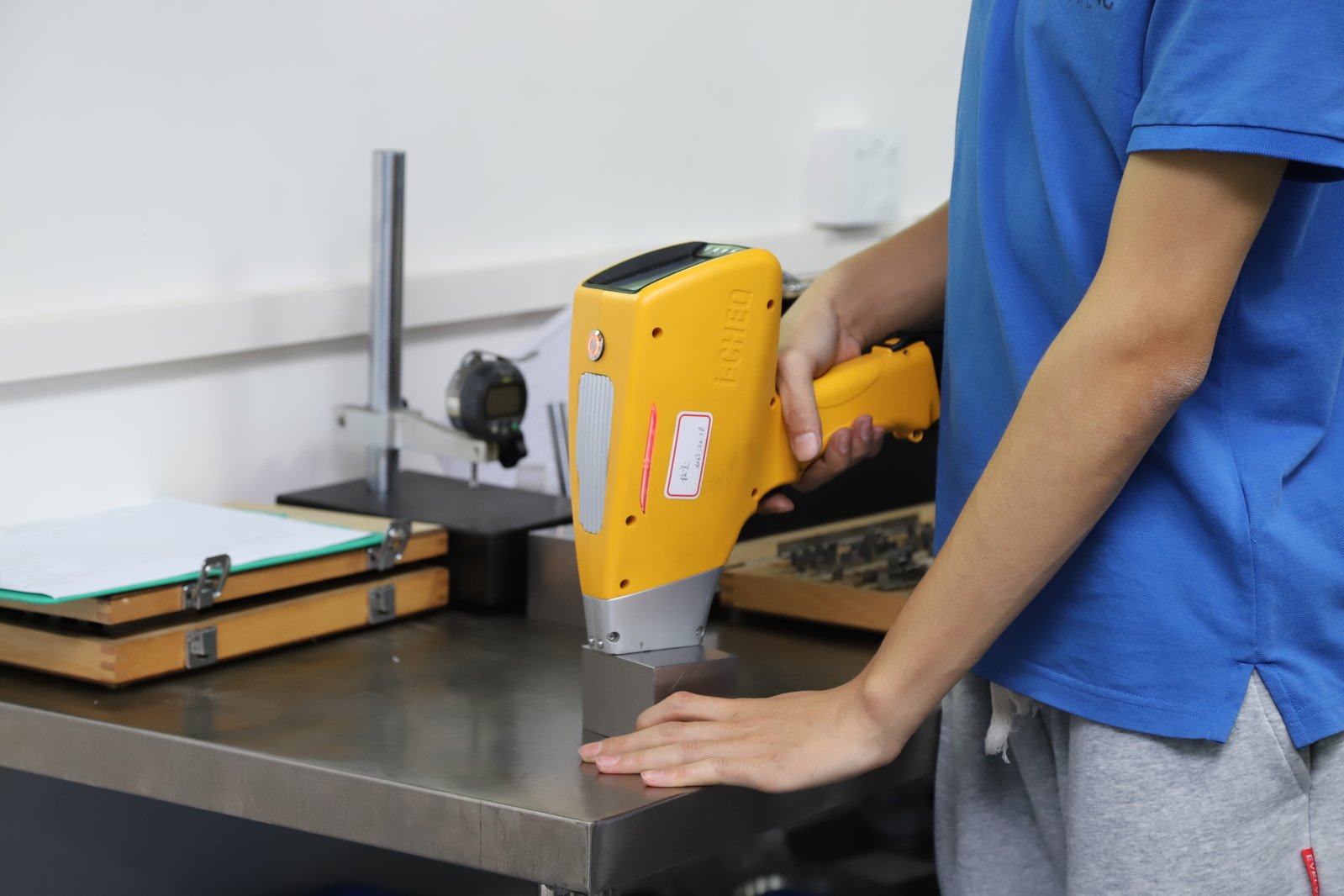
- "How do you verify incoming material against the certificate?" A real answer names a check — XRF on incoming lots — and confirms certificates travel with the parts. On custom-machined parts, a substituted alloy is invisible to the eye, so this check is the whole protection.
- "What does your dimensional report actually measure?" A real answer references the drawing datums and names the inspection equipment. A vague answer means the report may not prove your part is in tolerance.
- "How does your unit price change with quantity?" A real answer shows the setup amortization. A flat answer reveals pricing that is not cost-based.
- "What happens if a part arrives out of spec?" The answer reveals the non-conformance process — remake policy, root-cause investigation, and whether the lot is traceable to material and machine.
The four answers, in writing, give you the substance for a decision. A supplier that answers all four with specifics has passed the conversation layer; one that dodges any of them is telling you where its gaps are.
Pose the questions in a single message so the answers stay comparable across suppliers. When a candidate answers all four quickly and specifically, you have also learned something about responsiveness, which is a quality of its own — a shop that takes a week to answer a question at RFQ stage will take a week to answer one when your parts are on the floor. The speed and specificity of the reply is the first sample of the supplier's operating tempo.
Which red flags should stop the conversation?
Some signals warrant a clarifying question; others warrant a hard stop until proven otherwise:
None of these is an automatic disqualification in isolation — a low price can be a real efficiency — but each demands evidence before you proceed. The pattern to fear is the combination: cheap, flat, no questions, no entity, full payment up front. On payment, structure the first order with milestones: a deposit tied to material and a balance against inspection or shipment, moving to more favorable terms as the relationship proves itself. Milestones tie your money to documented progress rather than to promises.
How do you confirm quality with a sample order?
The conversation layer is necessary but not sufficient. The confirmation step is a small paid order on a non-sensitive design — a part that exercises the material, tolerance, and finish you care about without revealing your production geometry. With a 1-piece MOQ, the test is cheap, and so is the lesson if the supplier fails it.
When the sample arrives, run the review that predicts the production relationship: read the dimensional report against the part and spot-check critical dimensions with your own instruments; confirm the material certificate names the alloy and temper you specified; inspect the surfaces and edges for chatter, burrs, and tooling marks; time the response if anything is wrong; and judge the packaging and paperwork. The sample exercises the whole chain — quoting, material, machining, inspection, shipping — and tells you in one shipment whether this supplier is worth a real order.
The sample also converts tolerance claims into evidence. A stated ±0.003 mm on milled features, confirmed by a CMM report and your own micrometer, is a claim proven; a part that arrives off-tolerance with a defensive explanation is the cheapest lesson in supplier selection you will ever buy. The tolerance and measurement standards behind that test are explained in the quality and inspection guide.
How do you compare two shortlisted suppliers on total cost?
When two suppliers survive the screen, compare them on identical inputs and total cost rather than headline price. Send both the same complete package — STEP or IGES model, toleranced 2D drawing, material grade, finish, quantity, and documentation scope — and ask both for the same itemized format and incoterm. Then build the comparison that matters:
- Landed unit cost at your real quantity, including freight and duty.
- Quantity breakpoints — the price curve tells you the optimum order size and the reorder economics.
- Expected failure cost — the reject rate implied by their SPC or sample evidence, times what one defect costs you to handle.
- Engineering value — the quality of the DFM feedback, which predicts how many problems they catch before those problems reach you.
Most gaps between shortlisted suppliers are scope differences wearing the disguise of price — one includes finishing and inspection, the other treats them as extras. When the scope is identical, the remaining differences are real, and the supplier who itemizes, shows quantity breaks, and answers engineering questions is the one you can audit later. The cost structure behind the comparison is worked through in the custom machining cost guide, and the ordering mechanics are on the contact page.
Frequently Asked Questions
How do I tell a real custom machining factory from a trading company?
Check that the legal entity on the quote and the certificates match, verify the certificate numbers with the registrar, and ask for a live video walk-through aimed at a machine running your kind of part. A factory can show its floor; a broker cannot produce a floor it does not own.
What should a custom machining quote include to be trustworthy?
An itemized breakdown separating material, machining, finishing, inspection, and freight, with setup and programming visible and quantity breakpoints shown. A machined part's unit price should fall as quantity rises because setup amortizes; a flat number across quantities is a sign the pricing is not cost-based.
What tolerances should a custom machining supplier realistically hold?
Production capability on milled and turned features is ±0.003 mm, with ±0.002 mm reachable by precision grinding, and Ppk ≥ 1.67 at the initial study on key characteristics and Cpk ≥ 1.33 on general characteristics. Capability is reported per characteristic: every report names the feature, its tolerance band, the sample size, the sigma method, and the study window is the standard to quote. Claims inside that envelope are credible; verify them with a sample order and its dimensional report.
What are the red flags on a custom machining supplier?
A price far below every comparable quote, a flat unit price that ignores quantity, no named legal entity, certificate numbers that do not verify, pressure to pay in full before any work, and quotes issued with no engineering questions. Any one of these is a reason to slow down.
How do I test a custom machining supplier cheaply before a real order?
Order a sample part on a non-sensitive design. It exercises the whole chain — quoting, material, machining, inspection, packaging, shipping — and its dimensional report tells you whether the supplier holds what it quotes. With a 1-piece MOQ, the test is cheap and so is the lesson if it fails.
What documentation should a custom machining order carry?
At minimum, the material certificate and a dimensional report on critical features. Add SPC data on key characteristics for production lots and confirmation that incoming material was verified against its certificate. Documents move verification work from your incoming inspection to the supplier.
Should the first order be small?
Yes. A 1-piece prototype or a short pilot batch lets you validate the part, the reports, and the communication before committing volume. A minimum order of one piece is the standard that makes this possible, and it keeps the cost of a wrong supplier choice small.
How do I compare two shortlisted custom machining suppliers?
Send both the same complete package — model, toleranced drawing, material, finish, quantity, documentation scope — and ask for the same itemized format and incoterm. Then compare landed cost at your real quantity, the quantity breakpoints each offers, and the engineering quality of each DFM response.
Run the 30-minute screen on us.
Email a non-sensitive part and the four questions above to [email protected] or call +86 13126536955. You will get the entity details, the certificate numbers, an itemized quote with quantity breakpoints, and DFM questions.